Part 2 of 4 in the Enterprise AI Security Series
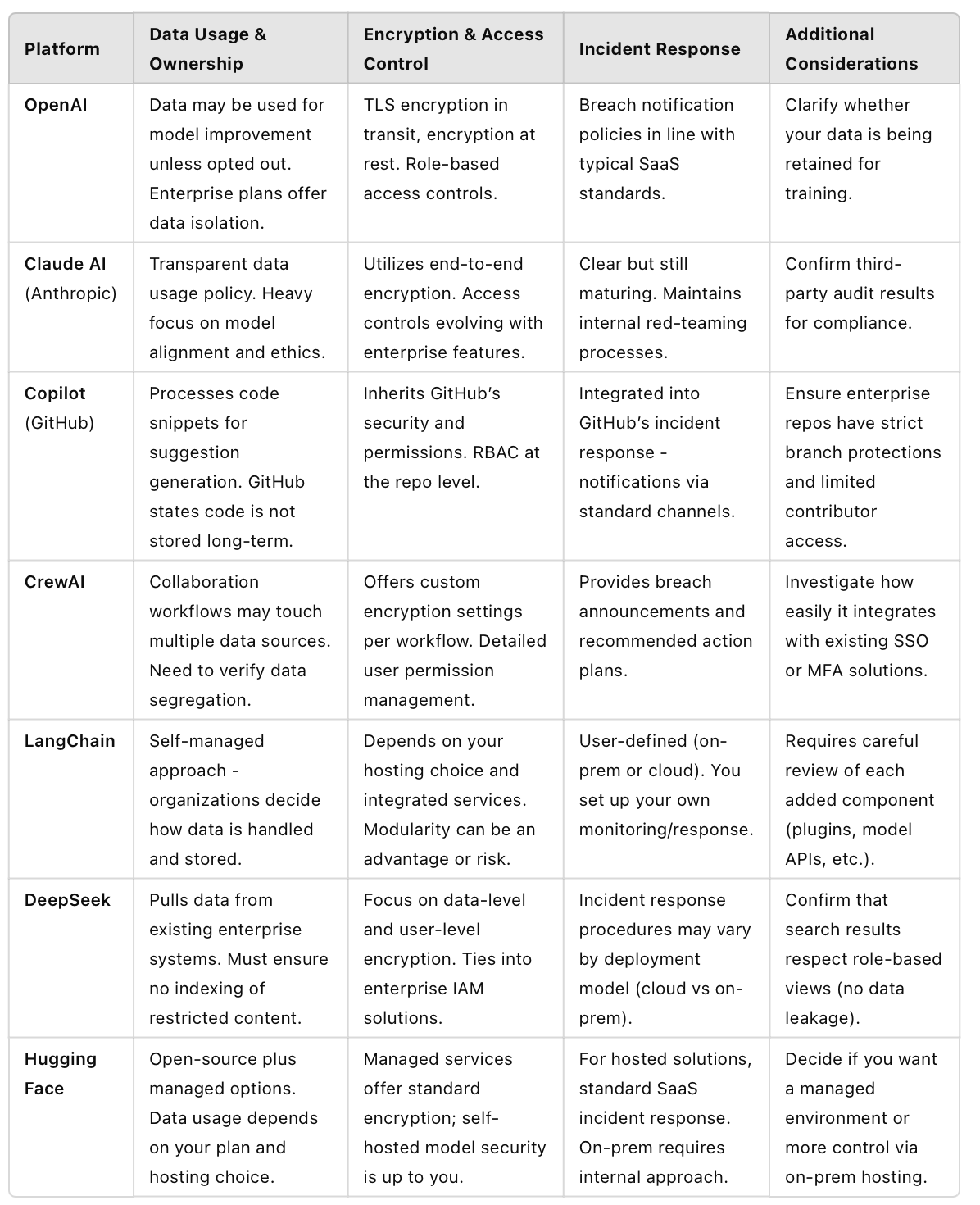
In the first article of this series, we laid the groundwork for evaluating AI solutions by emphasizing the importance of Terms of Service and Data Privacy. Now, let’s turn our attention to specific AI platforms, diving into their security features to help you make more informed decisions. We’ll look at popular options - including OpenAI, Claude AI, Copilot, CrewAI, LangChain, DeepSeek, and Hugging Face - and provide a high-level comparative analysis of each.
Understanding the Security Framework#
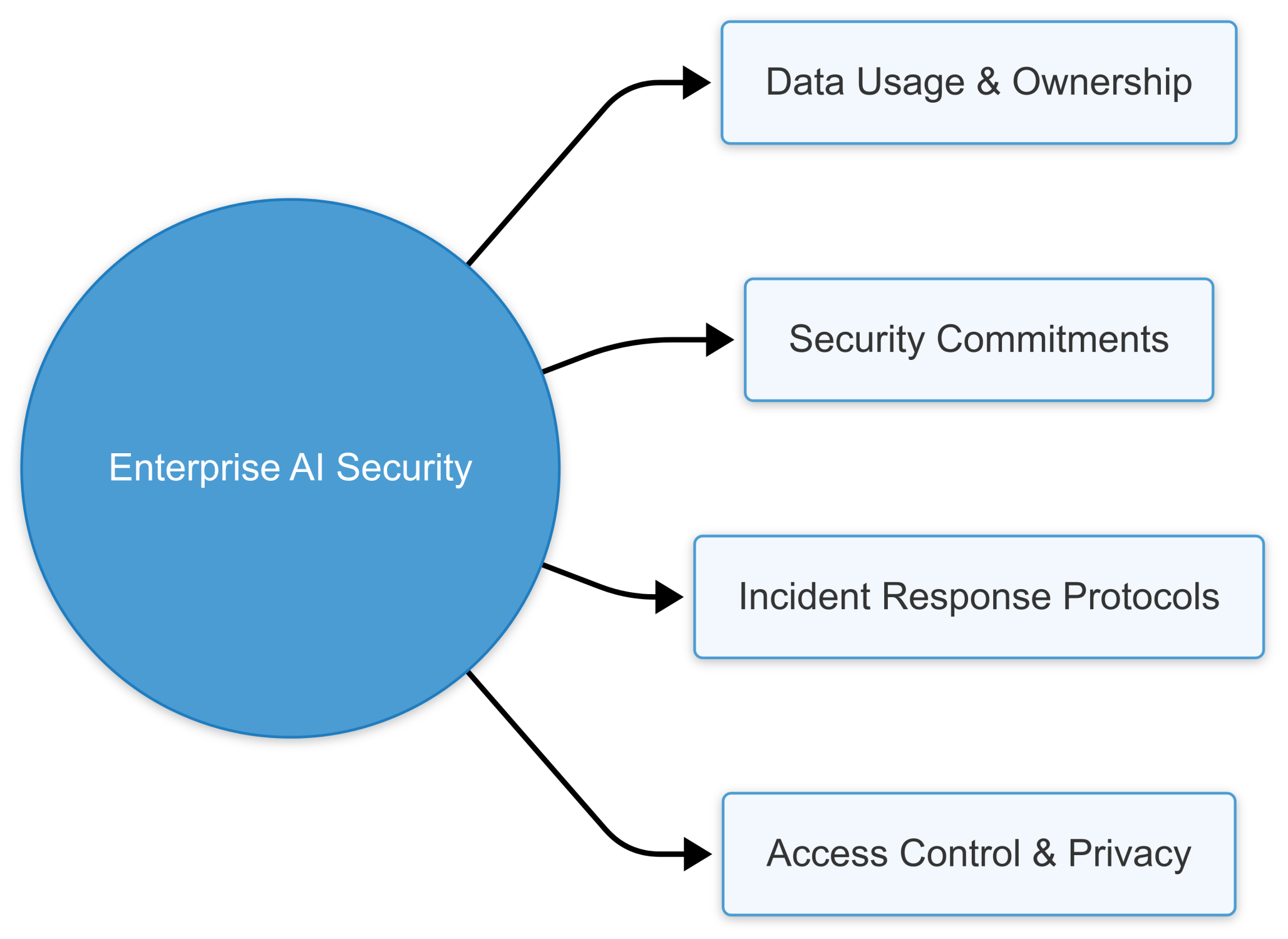
Before examining these platforms in detail, it’s important to reiterate the core evaluation pillars from Part 1:
Data Usage & Ownership
Security Commitments
Incident Response Protocols
Access Control & Privacy
These pillars set the stage for evaluating any AI platform. Let’s walk through each of the highlighted solutions to see how they stack up.
 Enlarge ↗
Comparative Analysis Framework#
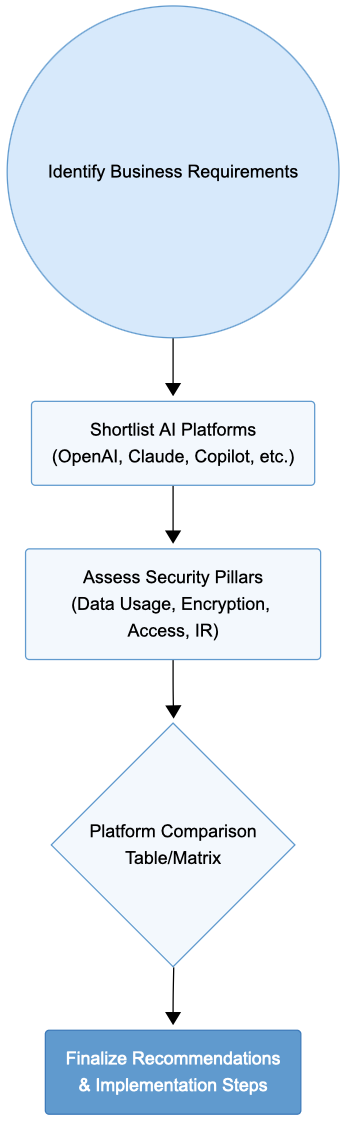
When selecting an AI platform, it’s critical to maintain a clear, methodical process. Below is a high-level diagram summarizing how to move from defining business needs to making a final platform choice.
 Enlarge ↗
With this visual in mind, let’s explore each of the seven platforms in turn:
 Enlarge ↗
Platform Integration Flow#
After reviewing platform capabilities, it’s helpful to visualize how an AI platform (or a combination of them) might mesh with your existing infrastructure. The diagram below shows a generic data flow and highlights where security checkpoints typically appear.
 Enlarge ↗
Choosing the Right Fit#
Selecting the “best” platform hinges on your unique business requirements, data sensitivity, and regulatory environment. Here’s how to wrap up your assessment process:
Map Requirements to Features: Align each platform’s offerings - encryption, privacy controls, incident response - to the pillars established in Part 1.
Request Clarity on Data Retention: Regardless of the provider, seek explicit details on data handling policies.
Evaluate Scalability & Integration: Consider how each tool slots into existing CI/CD pipelines, data governance standards, and internal workflows.
Perform a Risk Assessment: From a technical and legal standpoint, parse each TOS for liability clauses, breach notifications, and indemnification.
Looking Ahead#
Stay tuned for Part 3 of our Enterprise AI Security Series, where we’ll explore Proactive Security and Real-Time Threat Detection in AI Implementations. We’ll cover advanced techniques - like anomaly detection and model monitoring - that help you spot and mitigate threats before they escalate.
Until then, if you have any questions or want to discuss a specific platform’s security features, feel free to reach out or leave a comment. Together, we can help build an AI-driven future that’s both innovative and secure.