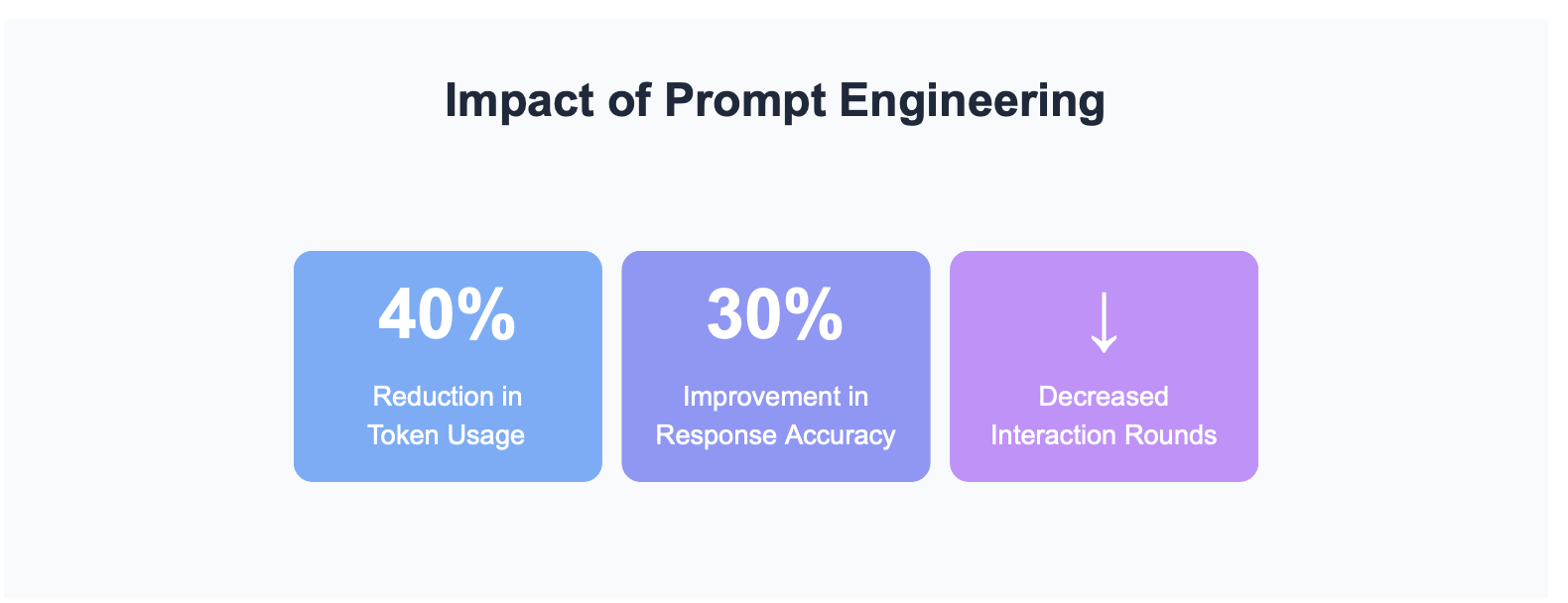
As Large Language Models (LLMs) continue to reshape our technological landscape, the role of prompt engineering has emerged as a crucial discipline at the intersection of human communication and artificial intelligence. In the past year, I've been deeply involved in developing and refining prompts for enterprise-scale LLM deployments. Through this experience, I've witnessed firsthand how the right prompting approach can mean the difference between mediocre and exceptional AI performance.
Today, I want to share insights into six prompt engineering techniques that I've found most effective in my work. These are the approaches I regularly use to achieve better results with AI systems. An important point to note is that these techniques aren't mutually exclusive - in fact, some of my most effective prompts combine multiple approaches to achieve the best results. I'll also address some common misconceptions and explore how these techniques can help anyone get better results when working with AI.
For example, you might combine context framing with constraint engineering, or use chain-of-thought prompting alongside output structure control. The key is understanding each technique's strengths and knowing how to blend them effectively for your specific needs.
 Enlarge ↗
The Growing Importance of Effective Prompt Writing
While there's ongoing discussion about whether prompt engineering constitutes a distinct profession, one thing is becoming increasingly clear: as generative AI becomes more prevalent in our daily lives and work, knowing how to effectively communicate with these systems is becoming an essential skill for everyone.
Understanding how to craft effective prompts isn't just for specialists - it's a fundamental skill that can dramatically improve any user's interaction with AI systems. Whether you're a developer, business analyst, content creator, or any professional working with AI tools, knowing how to guide these systems to produce better results can significantly impact your productivity and the quality of outputs.
From my experience working with enterprise-scale LLM deployments, I've observed that effective prompt writing involves:
Clear communication of intent and context
Understanding how to structure requests for optimal results
Knowledge of how to guide the AI toward more accurate and relevant responses
Ability to refine and iterate based on the outputs received
While organizations may have specialists focused on advanced prompt optimization and system integration, the fundamental skills of effective prompt writing are becoming as essential as digital literacy in today's AI-powered world. The techniques I'll share can help anyone improve their interactions with AI systems, regardless of their technical background.
The Six Core Techniques of Modern Prompt Engineering
1. Context Framing
The most powerful technique in your arsenal isn't about what you ask—it's about how you set the stage. Rather than simply requesting "Write a business plan," I've found that framing like "You are an experienced business strategist with 20 years of experience in SaaS startups" creates a foundation for more nuanced and relevant outputs. This technique establishes the LLM's behavioral boundaries and expertise level from the outset.
Try it yourself! Here's a real example:
2. Chain-of-Thought Prompting
One of the most transformative techniques I've implemented in production systems is chain-of-thought prompting. Instead of asking for direct answers, guide the model through explicit reasoning steps. For instance, rather than "What's the best marketing strategy?", use "Let's analyze this step-by-step: First, identify the target audience. Then, evaluate available channels. Finally, consider budget constraints and ROI expectations." This approach has consistently yielded more thoughtful and comprehensive responses in my projects.
3. Few-Shot Learning Through Examples
While LLMs come pre-trained with vast knowledge, showing them exactly how you want information structured through examples is invaluable. I've seen response quality improve dramatically by including 2-3 high-quality examples in complex prompts. The key is choosing examples that represent edge cases and demonstrate the desired output format clearly.
4. Constraint Engineering
One of the most underutilized techniques is explicit constraint setting. Rather than hoping the model stays within desired boundaries, I've found success in clearly stating limitations: "Provide recommendations within a $10,000 budget" or "Focus only on strategies applicable to B2B SaaS companies." This prevents scope creep and ensures relevant outputs.
5. Output Structure Control
Through countless iterations, I've learned that controlling output format is crucial for downstream processing. Using detailed structural prompts like "Format the response as follows: 1) Overview (2-3 sentences) 2) Key Findings (bullet points) 3) Recommendations (numbered list)" ensures consistency and improves integration with other systems.
6. Iterative Refinement
Perhaps the most powerful technique is treating prompt engineering as an iterative process. Start with a base prompt, analyze the outputs, identify failure modes, and refine. I maintain a version control system for prompts in production systems, treating them with the same rigor as software code.
Common Misconceptions and Pitfalls
The biggest mistake I see is treating prompt engineering as a one-and-done task. In reality, it's an ongoing process that requires continuous monitoring and refinement. LLMs can be sensitive to subtle changes in phrasing, and what works today might need adjustment as models evolve.
Another frequent misconception is that longer prompts are always better. Through extensive testing, I've found that concise, well-structured prompts often outperform lengthy ones. The key is precision, not volume.
Looking Ahead: The Evolution of Prompt Engineering
As we move forward, prompt engineering is evolving from an art into a more systematic discipline. We're seeing the emergence of prompt testing frameworks, version control systems for prompts, and automated optimization techniques. The field is rapidly professionalizing, with dedicated roles appearing in AI-focused companies.
The skills required are expanding beyond just understanding LLMs. Modern prompt engineers need to grasp concepts from systems engineering, UX design, and even psychology to create truly effective prompting strategies.
Practical Tips for Getting Started
If you're looking to develop your prompt engineering skills, start by:
Maintaining a prompt engineering journal to document what works and what doesn't
Testing prompts across different scenarios and edge cases
Building a library of reusable prompt components
Learning from the community while developing your own techniques
The future of AI development lies not just in model architecture but in our ability to effectively communicate with these systems. Prompt engineering isn't just about writing better instructions—it's about understanding the nuanced dialogue between human intent and machine capability.
Whether you're a machine learning engineer, AI researcher, or technical leader, developing strong prompt engineering skills will be crucial in the years ahead. The techniques shared here are just the beginning—the field is constantly evolving, and there's always more to learn and discover.
What prompt engineering techniques have you found most effective in your work? I'd love to hear about your experiences and insights in the comments below.