Advanced Information Retrieval in Enterprise AI#
The landscape of enterprise information retrieval is rapidly evolving beyond basic RAG implementations. While the foundational RAG approach revolutionized how AI systems access and utilize information, today's enterprise needs are driving the development of more sophisticated architectures that blend multiple retrieval strategies with advanced processing capabilities.
The Evolution Beyond Basic RAG#
 Enlarge ↗
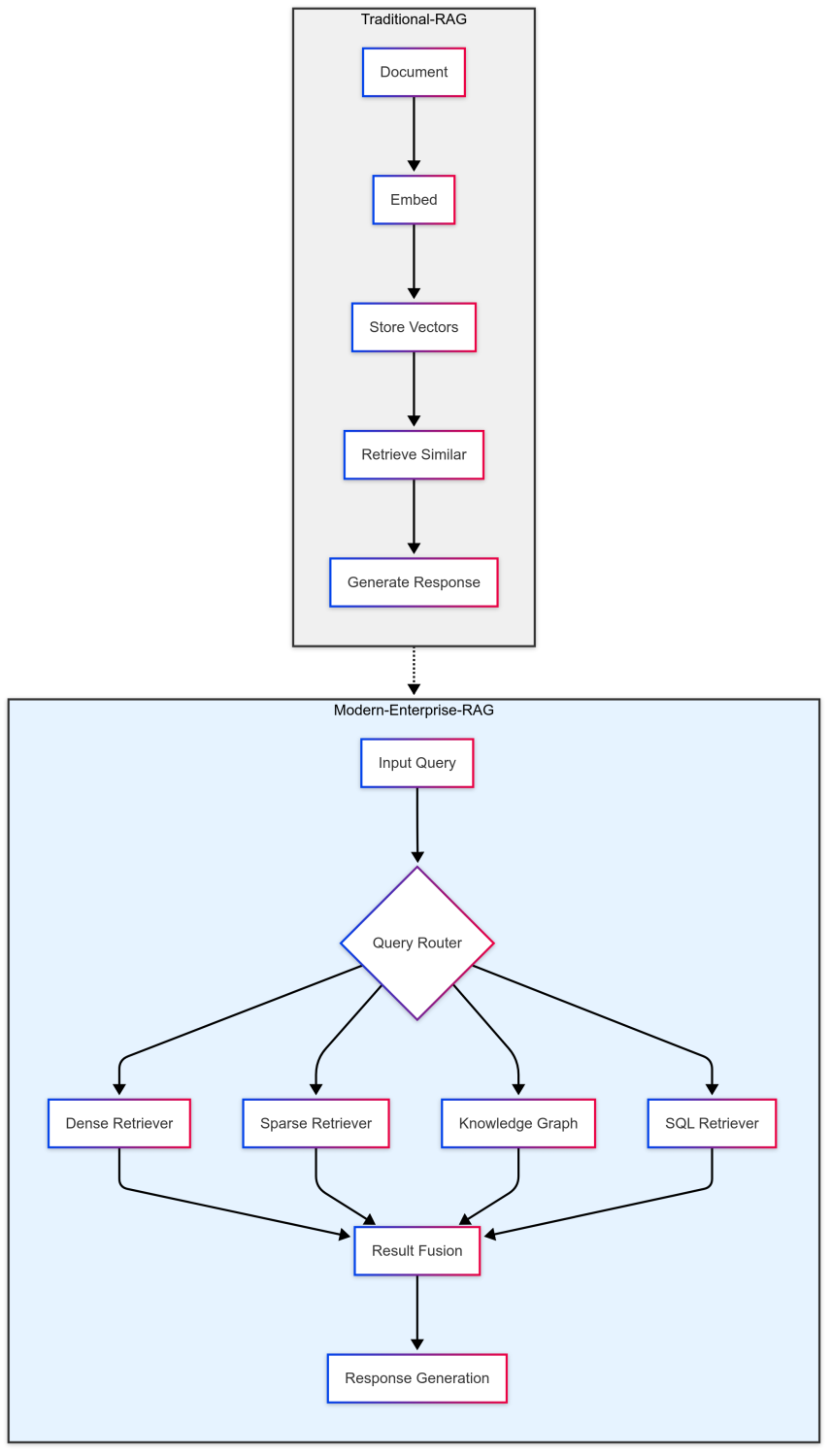
As shown in the diagram above, traditional RAG systems have evolved into sophisticated architectures that blend multiple specialized retrievers, each optimized for different types of information and query patterns.
Multi-Modal Retrieval: Beyond Text#
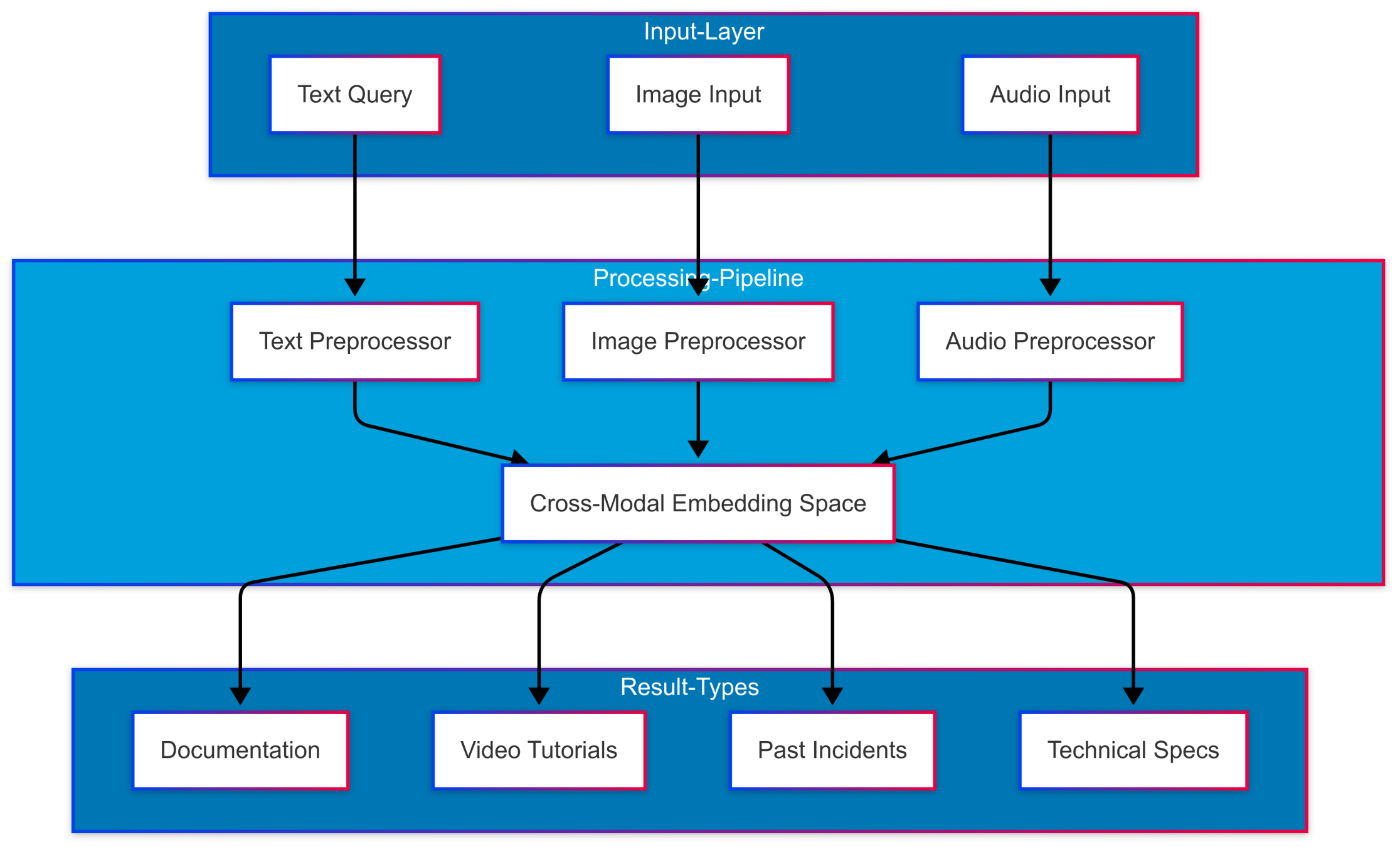
One of the most significant developments in enterprise information retrieval is the emergence of truly multi-modal systems. Modern enterprise data isn't just text; it's a rich tapestry of images, audio, video, and structured data.
 Enlarge ↗
The diagram above demonstrates how modern systems process multiple input types through specialized pipelines before unifying them in a cross-modal embedding space.
Hybrid Search Architectures#
The future of enterprise search lies in intelligent hybridization rather than choosing between neural or traditional approaches. The "Adaptive Retrieval Stack" concept represents a new paradigm where systems dynamically select and combine different search strategies based on query characteristics.
In a typical hybrid system, a user query triggers multiple simultaneous operations:
1. Semantic search using dense embeddings
2. Keyword matching via BM25
3. Knowledge graph traversal for related concepts
4. Structured database queries for factual information
The fusion layer uses learned ranking models to combine these results based on query intent and content type, consistently outperforming single-strategy systems in enterprise environments.
Real-World Implementation Challenges#
The implementation of advanced retrieval architectures faces several significant challenges:
Latency Management: complex hybrid systems can become latency bottlenecks, requiring aggressive parallel processing and caching strategies. This often involves making intelligent tradeoffs about which retrievers to invoke based on query patterns.
Data Freshness: managing multiple retrieval mechanisms requires sophisticated synchronization of indices and caches. Event-driven architectures have emerged as a solution for propagating updates across different retrieval components while maintaining system consistency.
Scale and Cost: as data volumes grow, maintaining multiple indices and embedding spaces can incur significant computational costs. Hierarchical indexing strategies and dynamic scaling of retrieval components based on usage patterns help manage these challenges.
Looking Ahead#
The next frontier in enterprise information retrieval lies in self-optimizing systems that can:
- Adjust retrieval strategies based on user feedback
- Optimize index structures for evolving query patterns
- Balance precision and recall based on business impact
- Manage computational resources dynamically
The success of these advanced systems ultimately depends on how effectively they solve real business problems. As technology continues to evolve, it's transforming how organizations manage and utilize their knowledge resources.
What aspects of advanced retrieval systems have you encountered in your work? Share your experiences and insights!